Four major corporate partners have withdrawn. The UK Prime Minister has condemned the booking. Politicians are calling for an entry ban. Festival Republic says the show will go on.
The Booking That Sparked a National Debate
Ye is set to headline all three nights of Wireless Festival 2026 at Finsbury Park in London on July 10, 11 and 12 — and the announcement has triggered one of the most explosive controversies in modern UK festival history. What was billed as a triumphant return for the rapper formerly known as Kanye West has instead become a flashpoint for political intervention, corporate withdrawal and a wider cultural reckoning over accountability, forgiveness and the limits of separating art from artist.
Wireless Festival, organized by Festival Republic and co-promoted by Live Nation, is one of the UK’s biggest urban music events, drawing up to 150,000 attendees across its three-day run each year. Organizers announced Ye’s headlining slot last week, framing it as a historic comeback — his first UK performance since headlining Glastonbury in 2015. Within days, the backlash was unprecedented.
Sponsors Walk Away: Pepsi, Diageo, Rockstar, PayPal
The commercial fallout has been swift and severe. Pepsi, the festival’s headline partner for over a decade — the event was officially branded Pepsi Presents Wireless — was the first to withdraw on Sunday, ending one of the longest-running naming-rights deals in UK festival history.
Diageo, the global drinks giant behind Johnnie Walker, Captain Morgan, Smirnoff and Guinness, pulled its sponsorship hours later. “We have informed the organisers of our concerns and as it stands, Diageo will not sponsor the 2026 Wireless festival,” the company stated.
On Monday, the exodus continued. Rockstar Energy withdrew its sponsorship, making it the third brand to distance itself. PayPal followed, with reports indicating the payment company will no longer allow its branding to be used at the event. As of Monday afternoon, all four brands were still listed on the official Wireless Festival website.
Additional sponsors — including Budweiser, Drip, Beatbox and Big Green Coach — have not publicly commented but are expected to face increasing pressure to take a position as the controversy deepens.
Political Firestorm: From the Prime Minister to Parliament
The political response has been extraordinary in its breadth and intensity. UK Prime Minister Keir Starmer condemned the booking in a statement to The Sun, calling it “deeply concerning” that Ye had been booked “despite his previous antisemitic remarks and celebration of Nazism.” Starmer added: “Antisemitism in any form is abhorrent and must be confronted firmly wherever it appears. Everyone has a responsibility to ensure Britain is a place where Jewish people feel safe.”
London Mayor Sadiq Khan distanced City Hall from the festival entirely. “We are clear that the past comments and actions of this artist are offensive and wrong, and are simply not reflective of London’s values,” his spokesperson said, clarifying that the booking was a decision by the festival organizers alone.
Ed Davey, leader of the Liberal Democrats, went further by publicly calling on the Home Secretary to ban Ye from entering the UK, following the precedent set by Australia, which revoked Ye’s visa in July 2025 over his “Heil Hitler” song. Labour MP Rachael Maskell echoed that call, and the Conservative Party wrote directly to Home Secretary Shabana Mahmood urging a formal ban.
Reports indicate that UK ministers are now actively considering whether to allow Ye to enter the country. The Home Office has not yet received a formal visa application from the rapper. The Campaign Against Antisemitism (CAA) has also demanded that Ye be barred, and the Jewish Leadership Council condemned the booking in the context of a rise in antisemitic attacks across Britain.
Festival Republic Doubles Down: Melvin Benn’s Full Defense
Despite the political and commercial pressure, Festival Republic has refused to change course. On Monday, managing director Melvin Benn issued a detailed public statement — part personal testimony, part philosophical defense — standing firmly behind the decision to book Ye.
Benn opened by establishing his personal credentials: “I am a deeply committed anti-fascist and have been all my adult life. I lived on a kibbutz for many months in the 1970s that was attacked on October 7th, am pro Jew and the Jewish state, while being equally committed to a Palestinian state.”
He then framed his decision through the lens of mental health and personal experience. “Having had a person in my life for the last 15 years who suffers from mental illness, I have witnessed many episodes of despicable behaviour that I have had to forgive and move on from,” Benn wrote. “If I wasn’t before, I have become a person of forgiveness and hope in all aspects of my life, including work.”
On Ye’s past antisemitic statements, Benn was unequivocal: “What Ye has said in the past about Jews and Hitler is as abhorrent to me as it is to the Jewish community, the Prime Minister and others that have commented and — taking him at his word — to Ye now also.”
The core of his argument, however, rested on a distinction between platforming someone’s opinions and presenting their music. “Ye’s music is played on commercial radio stations in this country. It is available via live streams and downloads in this country without comment or vitriol from anyone and he has a legal right to come into the country and to perform,” Benn stated. “We are not giving him a platform to extol opinion of whatever nature, only to perform the songs that are currently played on the radio stations in our country and the streaming platforms in our country and listened to and enjoyed by millions.”
Benn closed with a broader appeal. “Forgiveness and giving people a second chance are becoming a lost virtue in this ever-increasing divisive world,” he concluded. “I would ask people to reflect on their instant comments of disgust at the likelihood of him performing — as was mine — and offer some forgiveness and hope to him as I have decided to do.”
The Bigger Picture: Ye’s Ongoing Comeback Effort
The Wireless controversy arrives at a pivotal moment in Ye’s attempted career resurrection. In January 2026, he took out a full-page advertisement in The Wall Street Journal headlined “To Those I’ve Hurt,” in which he apologized for his antisemitic behavior and attributed his outbursts to a four-month manic episode linked to bipolar disorder. “I am not a Nazi or an antisemite,” the ad read. “I love Jewish people.”
Critics have noted this is not the first time Ye has apologized. The rapper issued a similar statement in 2023, only to relapse into further controversy — including a 2025 song titled “Heil Hitler” and selling swastika-branded merchandise on his clothing site. Australia revoked his visa over that song in July 2025, effectively barring him from performing in the country.
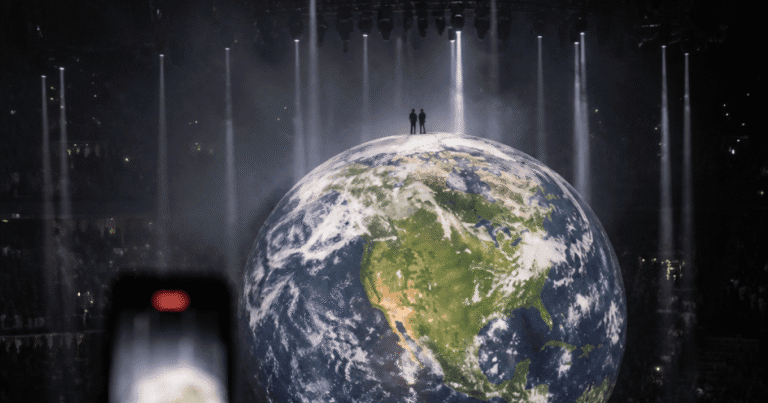
Yet Ye’s commercial viability appears resilient. His latest album, Bully, debuted at No. 2 on the Billboard 200 and currently sits at No. 3 on the UK album charts. Last week, he played two nights at SoFi Stadium in Los Angeles — his first major US performances in nearly five years — performing from atop a giant half-globe in the center of the arena. Guests included Travis Scott, Don Toliver and Lauryn Hill.
Beyond Wireless, Ye has additional European dates confirmed this summer in the Netherlands, France, Spain and Portugal, along with stadium shows in India and Turkey. Whether those dates proceed without similar pushback remains to be seen.
What Happens Next
Wireless Festival tickets are still expected to go on sale, but several major questions remain unresolved. The most significant is whether the UK Home Office will grant Ye entry to the country. Ministers are reportedly weighing the decision, and no formal visa application has been filed yet. If the government follows Australia’s example and blocks entry, the entire booking collapses regardless of what Festival Republic wants.
The sponsor exodus also raises financial questions. Losing Pepsi’s title sponsorship alone represents a major revenue hit, and the departure of Diageo, Rockstar and PayPal compounds the problem. Whether the remaining partners hold their positions — or whether new sponsors step in — could determine the festival’s financial viability in its current form.
Ye himself has remained silent on the controversy. He has not issued any public statement about the Wireless backlash, the sponsor withdrawals or the political calls for his entry to be blocked.
With more than three months until the scheduled performances, the situation remains fluid. What’s already clear is that Ye’s London booking has become something bigger than a festival lineup — it’s a test case for how far the music industry, the political establishment and the corporate world are willing to go in deciding where the line falls between artistic freedom, public safety and accountability.

Leave a Reply