What Is Rage Music? The Complete Guide to Hip-Hop’s Most Chaotic Subgenre
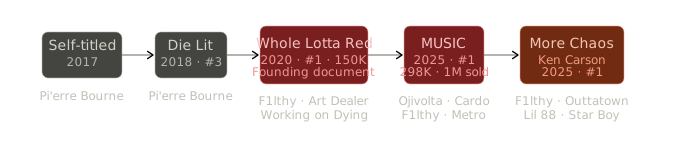
By 2020, Playboi Carti had spent three years making his fanbase wait. When Whole Lotta Red finally arrived on Christmas Day, the reaction split immediately — some called it unlistenable, some called it the most exciting rap album in years. Both groups were responding to the same thing: a record that had deliberately stripped away everything familiar about mainstream trap and replaced it with something faster, higher-pitched, and more chaotic. That sound had a name: rage. Rage is a subgenre of trap characterized by high-tempo production (typically 140–160 BPM), pitched-up vocals treated as percussive texture rather than melodic instruments, minimal conventional lyricism, and an energy level calibrated for crowd hysteria rather than headphone listening. It is deliberately maximalist and deliberately abstract — the opposite of the introspective, emotional direction that melodic trap took in the late 2010s. Five years after Whole Lotta Red, rage has gone from a cult sound to a commercial force. Carti’s 2025 album MUSIC debuted at No. 1 on the Billboard 200 with 298,000 first-week units — triple Whole Lotta Red’s opening — and became the first rap album of 2025 to sell over one million copies. The genre that mainstream rap dismissed in 2020 now drives some of the biggest numbers in the industry.
Origins: Playboi Carti and Pi’erre Bourne
The rage sound developed incrementally across Playboi Carti’s discography. His 2017 self-titled mixtape established a minimalist approach to rap — short tracks, sparse verses, production that carried more weight than the lyrics. The 2018 album Die Lit pushed further: faster tempos, more abstract vocal delivery, and production that felt closer to a rave than a rap session. Die Lit peaked at No. 3 on the Billboard 200 and built a fervent cult following, but it was Whole Lotta Red (2020) that committed fully to the aesthetic. Producer Pi’erre Bourne is the figure most closely associated with the sonic architecture that led to rage. His beats favor aggressive hi-hat patterns, distorted bass, spacey synthesizers, and a tempo that forces a physical response. The collaboration between Bourne and Carti across the self-titled mixtape and Die Lit produced what became the foundation: fast, aggressive, hypnotic, with vocals that function more like a sampled instrument than a traditional rap performance. On Whole Lotta Red, Carti moved beyond Bourne’s template into even more extreme territory. The album’s primary producers — F1lthy, Art Dealer, and members of the Working on Dying collective — built beats that were deliberately abrasive: distorted synths, punishing bass, tempos that rarely dropped below 140 BPM. Carti’s vocal approach shifted to match: the “baby voice” delivery he had been developing became more extreme, with repeated ad-libs used as melody and cadences that prioritized rhythmic feel over lyrical content. The album sold over 150,000 copies in its first week despite polarizing reviews. Critics were divided, but the audience it reached — particularly younger listeners and the live concert circuit — treated it as a generational statement. Whole Lotta Red became one of the most influential rap records of the early 2020s, spawning an entire subgenre in its wake.
How Rage Sounds: The Sonic Blueprint
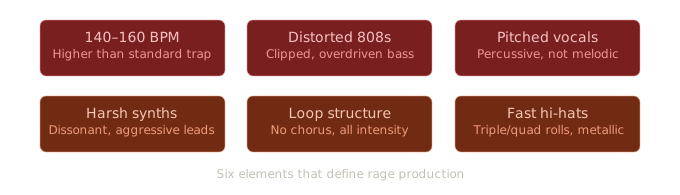
Rage production is built around a specific set of sonic elements that distinguish it from other trap subgenres: Tempo. Standard trap operates at 120–140 BPM. Rage pushes to 140–160 BPM, creating a rhythmic urgency that makes mosh pits feel inevitable. The higher tempo is the single most identifiable characteristic of the genre. Bass. The 808s in rage production are typically more distorted and saturated than in melodic trap. Rather than the deep, clean sub-bass of an Atlanta trap beat, rage bass is clipped, overdriven, and designed to hit the chest rather than the ears. Hi-hats and percussion. Rage hi-hat patterns are faster and more aggressive than standard trap. Triple and quadruple hi-hat rolls are common, often layered with metallic percussion that adds a mechanical, almost industrial quality. Synths. Where melodic trap uses lush, reverb-heavy synthesizers to create atmosphere, rage production favors harsh, distorted synth leads — often high-pitched and dissonant. The synths in rage are aggressive rather than beautiful. Vocals. The defining vocal technique in rage is pitch manipulation — vocals are processed to sound higher, more compressed, and more percussive. Lyrics are minimal and repetitive, with ad-libs and vocal textures taking priority over narrative content. The voice in rage functions as another layer of production, not as the primary carrier of meaning. Structure. Traditional verse-chorus-verse architecture is largely absent. Rage tracks tend to be loop-based: a single musical idea that repeats and intensifies, building energy through accumulation rather than through structural contrast. There is no hook in the pop sense — the entire track is the hook.
Key Producers Behind the Sound
While Carti is the face of rage, the genre’s sonic identity was shaped by a specific group of producers who built the template: Pi’erre Bourne — Carti’s most frequent early collaborator and the architect of the spacey, uptempo production that laid the groundwork for rage. His work on Carti’s self-titled mixtape and Die Lit defined the palette: fast tempos, floating synths, bouncy basslines. Pi’erre’s influence extends beyond Carti — his production style shaped the sound of an entire generation of SoundCloud-era artists. F1lthy — A member of the Working on Dying collective and the producer most responsible for the harsher, more abrasive direction rage took on Whole Lotta Red. F1lthy’s beats are built on distorted synthesizers, crushing 808s, and a deliberate ugliness that distinguishes them from Pi’erre’s more melodic approach. His production on tracks like “Stop Breathing” and “Rockstar Made” became the template for the genre’s most aggressive wing. Art Dealer — A producer whose ambient, ethereal beats provided the contrast on Whole Lotta Red. While F1lthy handled the chaos, Art Dealer’s tracks (“ILoveUIHateU,” “Over”) offered a more atmospheric take on rage’s high-tempo formula, proving that the genre could accommodate mood and texture alongside aggression. Ojivolta — The production duo of Ojivolta (Oj da Juiceman and Volta) became central to Carti’s sound on MUSIC (2025), contributing production across much of the album. Their beats retain rage’s tempo and energy but incorporate a broader palette — including elements of 2000s Atlanta mixtape culture that marked MUSIC’s evolution beyond the pure WLR template. Cardo, Bnyx, Metro Boomin, and Wheezy also contributed to MUSIC, reflecting the genre’s increasing absorption of mainstream trap production talent as it scaled commercially. Other producers central to the rage ecosystem include Outtatown (a defining presence for Ken Carson and Destroy Lonely’s projects), Lucian, Star Boy, and Lil 88.
Key Artists: The Rage Roster
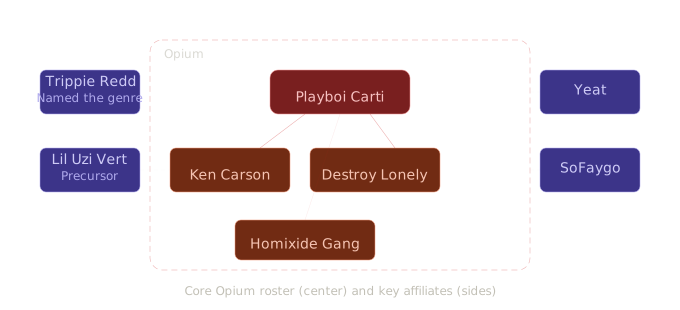
While Playboi Carti is rage’s most visible figure, the genre was shaped and popularized by a wider network of artists. Understanding rage requires knowing the full roster: Trippie Redd — The artist who literally gave the genre its name. Trippie’s 2021 single “Miss the Rage” (featuring Carti) was built around a scraping, triumphant synth melody that became the template for what fans and producers started calling “rage beats.” The song earned over 200 million on-demand streams and became the genre’s defining crossover moment. His album Trip at Knight (2021) was the first primarily rage project to chart significantly, and Trippie has publicly claimed co-inventor status alongside Carti, XXXTentacion, and Lil Uzi Vert. He cited XXXTentacion as an influence on the genre’s aggressive, punk-adjacent energy. Lil Uzi Vert — One of rage’s most important precursors. Uzi’s high-energy vocal delivery, anime-influenced aesthetic, and willingness to push trap into eccentric territory on projects like Luv Is Rage 2 (2017) and Eternal Atake (2020) laid groundwork for the rage wave. While Uzi’s music is more melodically structured than pure rage, his influence on the genre’s vocal style, fashion, and audience is undeniable. He appeared on Carti’s MUSIC and remains a frequent collaborator across the scene. Yeat — The Oregon-born rapper who emerged from the underground in 2021 and became one of rage’s biggest commercial success stories via TikTok virality. Yeat’s music took the rage template and added distinctive elements: bell samples as a signature texture, an alien vocal quality, and eccentric slang (“tonka,” “lüh,” “twizzy”) that became its own cultural language. Songs like “Sorry Bout That” and “Mad Bout That” went viral and earned him over 2 billion on-demand streams in 2022 alone. His album 2093 (2024) showed the sound evolving into more cinematic territory. Yeat was noticed by Drake and collaborated with him, further bridging rage to the mainstream. Ken Carson — Signed to Opium in 2019, Carson has become the label’s biggest breakout success after Carti himself. His trajectory shows the genre’s growth: from X (2022, No. 115 on Billboard 200) to A Great Chaos (2023, No. 11, certified Platinum) to More Chaos (April 2025, No. 1 on Billboard 200 with 59,500 first-week units). More Chaos directly replaced Carti’s MUSIC at the top of the chart — back-to-back No. 1s for Opium. Carson’s style blends rage’s distortion with punk energy and has been called the “face of rage in 2024” by The Fader. He opened for the Red Hot Chili Peppers in 2024 and has received co-signs from Jay-Z and LeBron James. Destroy Lonely — Another Opium signee whose music represents the genre’s more melodic wing. His 2022 mixtape No Stylist and 2023 album If Looks Could Kill blended rage’s energy with enough structure to cross into mainstream streaming numbers. Where Ken Carson is rage’s most aggressive voice, Destroy Lonely demonstrates that the template can accommodate atmosphere and melody without losing its identity. SoFaygo — An early adopter of the rage sound who bridged the gap between the SoundCloud emo era and the new wave. His 2020 single “Off the Map” is considered one of the first proper rage songs. SoFaygo’s colorful, melodic vocal style — layered over unmistakably rage production — influenced how the genre absorbed pop sensibilities. He collaborated with Trippie Redd on “MP5” and has been signed to Cactus Jack (Travis Scott’s label), connecting the rage and melodic trap ecosystems. Homixide Gang — The Opium duo whose raw, unpolished energy is closest to rage’s live performance identity. Their project Homixide Lifestyle (2023) captures the genre at its most visceral — minimal production, aggressive delivery, no concessions to accessibility. Underground and next generation. The rage ecosystem extends well beyond these names. Artists like OsamaSon, Che, 2Slimey, Nettspend, and 2hollis are pushing the sound into more extreme and experimental territory — heavier bass, more abrasive production, more confrontational aesthetics. The underground rage scene continues to evolve rapidly, with new artists emerging from SoundCloud and TikTok on a weekly basis. Mainstream rap has also absorbed rage’s influence in diluted form. Drake’s “What’s Next” (2021) was widely compared to Whole Lotta Red’s sound and debuted at No. 1 on the Hot 100. Kanye West has claimed he “invented rage” with Yeezus (2013) — a claim Trippie Redd publicly rejected. The debate itself illustrates how central the genre has become to hip-hop’s conversation.
Rage vs. Melodic Trap: Key Differences
| Rage | Melodic Trap | |
| Tempo | 140–160 BPM | 120–140 BPM |
| Vocals | Pitched up, percussive, abstract | Auto-Tuned melody, sung hooks |
| Lyrics | Minimal, hypnotic, repetitive | Emotional, narrative, introspective |
| Song structure | No traditional chorus; loop-based | Verse-chorus-verse; builds to hooks |
| Energy | Maximum, chaotic, mosh-pit calibrated | Atmospheric, layered, headphone-friendly |
| Production | Distorted 808s, aggressive hi-hats | Layered synths, reverb, ambient textures |
| Live identity | Punk/metal energy; moshing, stage dives | Festival spectacle; pyro, immersive design |
| Key artist | Playboi Carti | Travis Scott |
| Key album | Whole Lotta Red (2020) | Astroworld (2018) |
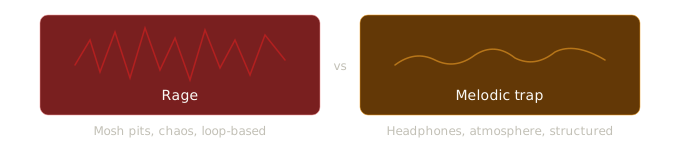
The clearest way to understand rage is to hear it next to melodic trap. Both genres come from the same Atlanta lineage. But where Travis Scott’s Astroworld uses trap’s rhythmic structure to build emotional atmosphere — layered synths, introspective lyrics, verse-chorus architecture — rage removes the architecture. There is no chorus in the traditional sense, no emotional narrative, no resolution. The track exists to create a specific physical state in the listener, not to tell them something. This is not a quality distinction. Rage and melodic trap are doing different things for different contexts. Melodic trap is headphone music — designed for individual, immersive listening. Rage is room music — designed for crowds, volume, and physical response. The question is not which is better but which serves the moment.
The Rage Aesthetic: More Than Just Music
Rage developed a visual and cultural aesthetic alongside its sound that is inseparable from the music itself. Visual identity. Playboi Carti’s Whole Lotta Red album artwork — red on black, gothic lettering — became one of the most referenced images in streetwear and graphic design. The vampire aesthetic Carti adopted for the album’s era influenced fashion, tattoo culture, and how a generation of younger artists presented themselves. Dark palettes, gothic typography, and horror-influenced imagery became the genre’s visual language. Fashion. Rage’s fashion identity draws from goth, punk, and avant-garde streetwear. Leather, oversized silhouettes, platform boots, silver jewelry, and all-black fits are standard. The aesthetic is deliberately anti-mainstream — closer to Rick Owens than to the designer-label flex that defined earlier trap fashion. Live performance. Live shows are central to rage’s identity in a way that separates it from other rap subgenres. Carti’s concerts — known for crowd moshing, stage-diving, and a level of physical energy more associated with punk or metal shows than hip-hop — helped define what rage is supposed to feel like in a room. The music was designed to be experienced at volume, in a crowd, at maximum intensity. His Antagonist Tour (October–December 2025) continued this tradition, with sell-out dates across North America. Opium as aesthetic universe. Artists who followed in the rage direction — Ken Carson, Destroy Lonely, Homixide Gang — are collectively associated with Opium, Carti’s label imprint. The Opium roster operates as a coherent aesthetic project: the same visual language, the same sonic template, the same approach to performance. It functions less like a traditional record label and more like a creative collective with a unified identity.
MUSIC (2025): Rage Goes Mainstream
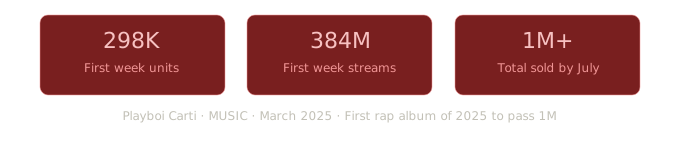
Released March 14, 2025, MUSIC (also referred to as I AM MUSIC) is Playboi Carti’s third studio album and the moment rage proved it could operate at blockbuster scale. The 30-track album debuted at No. 1 on the Billboard 200 with 298,000 first-week units — the biggest opening week for a rap album in 2025 and the largest streaming week for a hip-hop project since 2023. It generated 384 million on-demand streams in its first week alone. MUSIC marked a stylistic evolution. Carti moved away from the extreme “baby voice” delivery of Whole Lotta Red toward a deeper, raspier vocal approach while retaining the genre’s core elements: high tempos, percussive vocals, and loop-based structures. The album incorporated elements of 2000s Atlanta mixtape culture, broadening rage’s sonic vocabulary without abandoning its identity. The guest list reflected rage’s growing gravitational pull: Travis Scott, The Weeknd, Kendrick Lamar, Future, Lil Uzi Vert, Jhené Aiko, Skepta, Ty Dolla Sign, and Young Thug all appeared. Production was handled by Ojivolta, Cardo, F1lthy, Bnyx, Kanye West, Maaly Raw, Metro Boomin, Wheezy, TM88, and Southside. The album produced two simultaneous top-five Hot 100 entries: “Evil Jordan” debuted at No. 2, and “Rather Lie” (with The Weeknd) debuted at No. 4. A deluxe edition, MUSIC – Sorry 4 Da Wait, followed on March 25 with four additional tracks including a Travis Scott feature. By July 2025, MUSIC had surpassed one million units sold — the first rap album to reach the milestone that year. MUSIC’s commercial success fundamentally changed the conversation around rage. A genre that was once dismissed as too niche, too abrasive, and too structurally unusual for mainstream consumption had produced one of the biggest rap albums of the year. The question was no longer whether rage could sell, but what it would evolve into next.
Rage vs. Phonk vs. Hyperpop: Related But Different
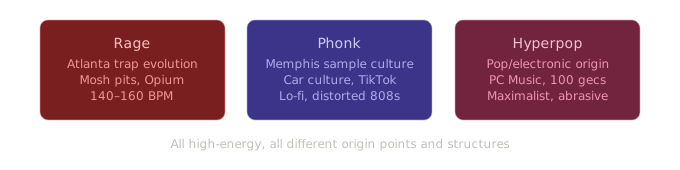
Rage is frequently confused with other high-energy subgenres. The distinctions matter: Phonk is a separate subgenre that samples Memphis rap from the 1990s — artists like Three 6 Mafia, DJ Paul, and Tommy Wright III — and adds distorted 808s and a lo-fi aesthetic. Phonk became widely popular on TikTok and is heavily associated with car culture and drifting videos. It shares rage’s high energy but has a completely different sonic origin point (Memphis sample culture vs. Atlanta trap evolution) and cultural context. They are frequently confused because both are fast and loud, but they have almost nothing in common structurally. Hyperpop — associated with 100 gecs, A.G. Cook, and the PC Music label — shares rage’s maximalism and its willingness to push production into deliberately abrasive territory. But hyperpop comes from pop and electronic music traditions, not from trap. The overlap is aesthetic (both genres reject restraint) rather than structural (different tempos, different vocal approaches, different rhythmic foundations). Drill — particularly UK drill and Brooklyn drill — shares rage’s aggressive energy and its emphasis on bass-heavy production. But drill is lyrically dense where rage is lyrically minimal, and drill’s tempo (typically 140 BPM in its UK variant) serves a different rhythmic purpose: a sliding, bouncing groove rather than rage’s propulsive, mosh-pit cadence.
Essential Rage Projects
| Artist | Project | Year | Notes |
| Playboi Carti | Die Lit | 2018 | Proto-rage: fast, abstract, chaotic. Before the genre had a name. |
| Playboi Carti | Whole Lotta Red | 2020 | The founding document. Divisive on release, now canonical. |
| Trippie Redd | Trip at Knight | 2021 | Named the genre via “Miss the Rage.” First major rage album to chart. |
| Playboi Carti | MUSIC | 2025 | 298K first week. Proved rage could scale to blockbuster level. |
| Ken Carson | A Great Chaos | 2023 | Breakout. #11 Billboard 200, Platinum certified. “Face of rage in 2024.” |
| Ken Carson | More Chaos | 2025 | #1 Billboard 200. Back-to-back Opium chart-toppers. |
| Destroy Lonely | If Looks Could Kill | 2023 | Rage’s most melodically developed release. Crossover appeal. |
| Yeat | 2093 | 2024 | Rage-adjacent. Bell-driven production, alien vocal approach, cinematic. |
| SoFaygo | Off the Map (single) | 2020 | One of the earliest proper rage tracks. SoundCloud-to-mainstream bridge. |
| Homixide Gang | Homixide Lifestyle | 2023 | Raw duo energy. Closest to rage’s live performance identity. |
| Lil Uzi Vert | Eternal Atake | 2020 | Not pure rage, but a key influence on the sound’s development. |
Frequently asked questions
Who invented rage music?
Rage as a defined subgenre is most associated with Playboi Carti and producer Pi’erre Bourne. The sound developed across several projects, with Whole Lotta Red (2020) being the most complete expression of the aesthetic. Earlier artists — including Lil Uzi Vert and elements of the SoundCloud rap scene — contributed elements of the sound, but Carti is the figure most credited with crystallizing it into a distinct genre. The production collective Working on Dying (particularly F1lthy) and producer Art Dealer were instrumental in building the sonic template.
What does ‘rage’ mean in rap?
In rap, rage refers specifically to the subgenre associated with Playboi Carti and the Opium label — high-tempo beats, pitched-up vocals, minimal lyrics, and an aesthetic rooted in maximum energy. It is distinct from the general emotional meaning of the word. When fans and critics say a song “sounds like rage” they are referring to this specific sonic template, not describing the emotional content of the lyrics.
Is rage music the same as phonk?
No. Phonk is a separate subgenre that samples 1990s Memphis rap and adds distorted 808s and a lo-fi aesthetic. Rage shares phonk’s high energy but has a completely different sonic origin point (Atlanta trap vs. Memphis sample culture) and cultural context. Phonk is associated with car culture and TikTok; rage is associated with mosh pits and the Opium label. They are frequently confused because both are fast and loud, but they have almost nothing in common structurally.
Is rage music popular?
Yes. Rage has moved from a cult sound to a mainstream force. Playboi Carti’s MUSIC (2025) debuted at No. 1 on the Billboard 200 with 298,000 first-week units and became the first rap album of 2025 to sell over one million copies. Destroy Lonely and Ken Carson have achieved significant streaming numbers. The sound has influenced mainstream producers and appears in diluted form across commercial trap releases. It is no longer a niche genre.
What label is associated with rage music?
Opium — Playboi Carti’s label imprint — is the institutional center of rage music. Its roster includes Ken Carson, Destroy Lonely, and Homixide Gang, among others. The label functions as a coherent aesthetic project as much as a business entity, with a consistent visual and sonic identity that defines what the rage genre looks and sounds like.
Is Yeat rage music?
Yeat is rage-adjacent. His production shares rage’s high tempos and distorted bass, and his vocal approach — characterized by an alien, bell-tone quality — overlaps with rage’s pitched-up aesthetic. However, Yeat’s music has a distinctive melodic character and a production palette (particularly the use of bell sounds and spacey synths) that sets him apart from the core Opium sound. He is best understood as part of the same wave rather than a direct extension of Carti’s template.
What is Playboi Carti’s best rage album?
This depends on what you value. Whole Lotta Red (2020) is the genre’s founding document and the most uncompromising expression of the rage aesthetic. MUSIC (2025) is the commercial breakthrough that proved the sound could scale — it sold over a million copies and featured an all-star guest list. Die Lit (2018) is the predecessor that laid the groundwork before rage had a name. For newcomers, MUSIC is the most accessible entry point; for purists, Whole Lotta Red is the essential record.
How did Whole Lotta Red perform when it came out?
Whole Lotta Red debuted at No. 1 on the Billboard 200 with approximately 150,000 first-week units when it released on Christmas Day 2020. Reviews were sharply divided — many mainstream critics gave it mixed or negative scores, while a passionate fanbase and underground hip-hop community championed it immediately. Over the following years, the album’s reputation grew significantly, and it is now widely regarded as one of the most influential rap albums of the early 2020s.